Michael Downey and Thomas Singleton’s officially dead status
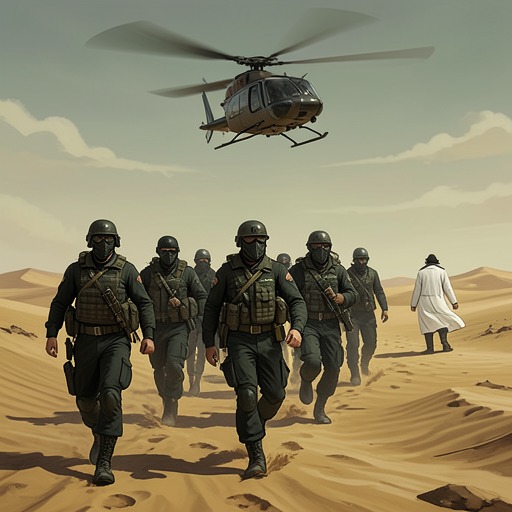
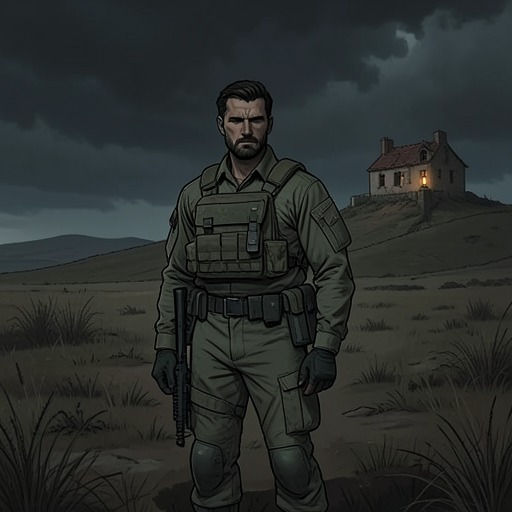
Down Cemetery RoadMichael Downey and Thomas Singleton’s officially dead status was not a mistaken record but a deliberate cover story: after a helicopter crash that Downey had never experienced, the state represented him and other soldiers as dead while continuing to hold them. The fiction concealed a chemical-weapons experiment, erased the men from public life, and turned their survival into a threat to the government that had declared them gone.
The false death and the concealed experiment
Downey first confronts the discrepancy when Sarah Trafford tells him that he has been dead for four years and that the reported death was in a helicopter crash off Cyprus. He insists that he has never been to Cyprus. Only after hearing the date does he register the passage of time. His bewilderment exposes the gulf between a public account that has settled into fact and the life he actually remembers: he survived, but the official version has assigned him a death he did not undergo.
The explanation he gives Sarah links that false death to a nerve-agent test. He says that he and the other men were guinea pigs: a chemical agent had been used, while a substance painted onto them was supposed to protect them. He connects the test to the idea of the Patriot Bomb, a weapon imagined to kill the enemy without harming its own troops. He doubts that such a weapon exists, but says that attempts to create one have not stopped. The declared deaths therefore conceal not only the soldiers’ survival but a military experiment whose promised selectivity failed in practice.
Captivity behind the cover story
After the experiment, Downey says, the survivors were moved to an island off Scotland’s West Coast. Their keepers presented themselves as ordinary men ensuring the soldiers’ welfare, not as guards holding prisoners. The men asked every day when they would go home and were repeatedly told that only a few matters remained to be sorted out; tomorrow, or perhaps the day after, the boat would come. Downey measures the waiting in hundreds of tomorrows, a succession of assurances made possible by the captives’ isolation and the public belief that they were already dead.
The cover story became explicit when one guard told Tommy Singleton that the men were supposed to have died in the helicopter. Until then, the prisoners had not understood the men around them as guards. Once they learned that the world had already been told they were dead, the assurances of a return home could no longer be separated from the confinement. Downey describes the revelation as the end of pretending: the armed men were not carrying weapons merely because regulations required it, and the prisoners were not being kept in cells for their protection.
Downey speculates that the authorities might have wanted further tests, expected long-term effects to kill the survivors, or lacked the political authorization to execute members of the armed forces. He presents the last possibility as his own belief, not as a confirmed account. In any case, the state’s dilemma was also its method of control: it would not release the men after announcing their deaths, yet their status made it difficult simply to dispose of them without further political cover.
From military scandal to state custody
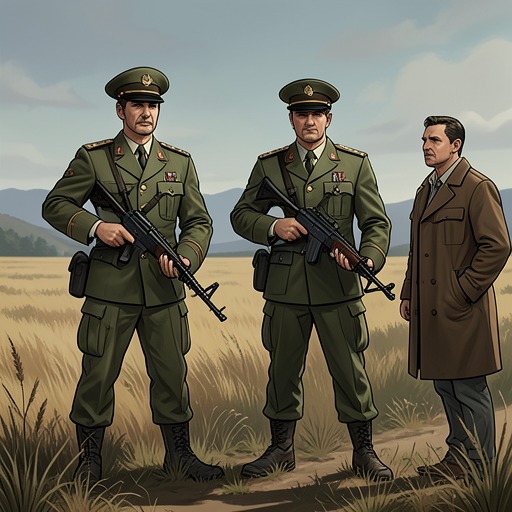
The account of the soldiers’ history broadens beyond the island. At Crows’ Hill, Downey and Thomas Singleton had served as guards at a camp for Iraqi prisoners near the end of the Gulf War. A small group captured at an Iraqi military compound was suspected of having tortured prisoners; one night, Singleton, Downey, and others took three of the men to the wire and shot them. The killings could have brought punishment, but the war was popular and officials arranged a fix rather than expose a scandal. Singleton’s group was removed from Crows’ Hill and kept in close confinement for the rest of the war; the army continued to have no settled public answer for what to do with them afterward.
Their later recruitment into special services appeared to relieve the embarrassment, but it did not resolve it. When that service ended, the soldiers were delivered into the hands of The Department, officially dead and now treated as liabilities to be managed. At the Farm, the government continued observing the effects of the nerve bomb. The experiment had failed to provide full protection: immunization had worked for only seventy per cent. The men were kept there while officials waited for cancers to take hold, after which they would be discarded. Their escape interrupted that plan, carrying the supposedly dead back into a world where their existence could expose what had been done.
Political value and human cost
The false death becomes a matter of national policy once Downey can speak publicly. C tells Howard that the country is prepared to take up arms to prevent Downey from going public and makes clear that this possibility must not be discussed as an option. Later, he argues that exposing the experiment would reveal that British forces had used live targets for a chemical weapon and would invite political consequences, including sanctions and the danger of further conflict. The men’s status is thus more than an administrative lie: it is part of a strategy for protecting the government from the evidence their survival represents.
The cover-up’s moral logic appears again when C tells Sarah that the public never knew the Iraqi prisoners had been killed. He describes concealment as the work of clearing up after wrongdoing and argues that the public does not want to know what happens in democracy’s margins. The language makes secrecy sound like public service, while the officially dead soldiers and murdered prisoners bear its costs. In the final confrontation, Howard warns that if Sarah uses her gun, The Department will remain and people connected to her—including Downey, the child, and her husband—will suffer staged accidents. The threat shows the reach of the same machinery that erased the soldiers: declaring a person dead can hide past violence, but the power to manufacture an official account also makes living witnesses and their associates targets for future silencing.